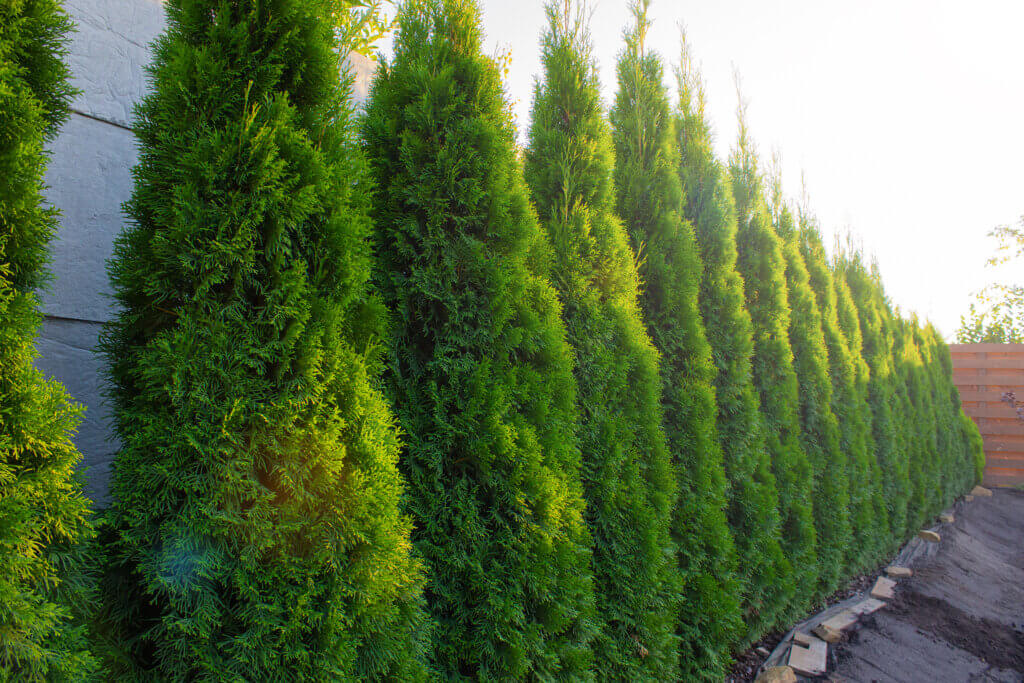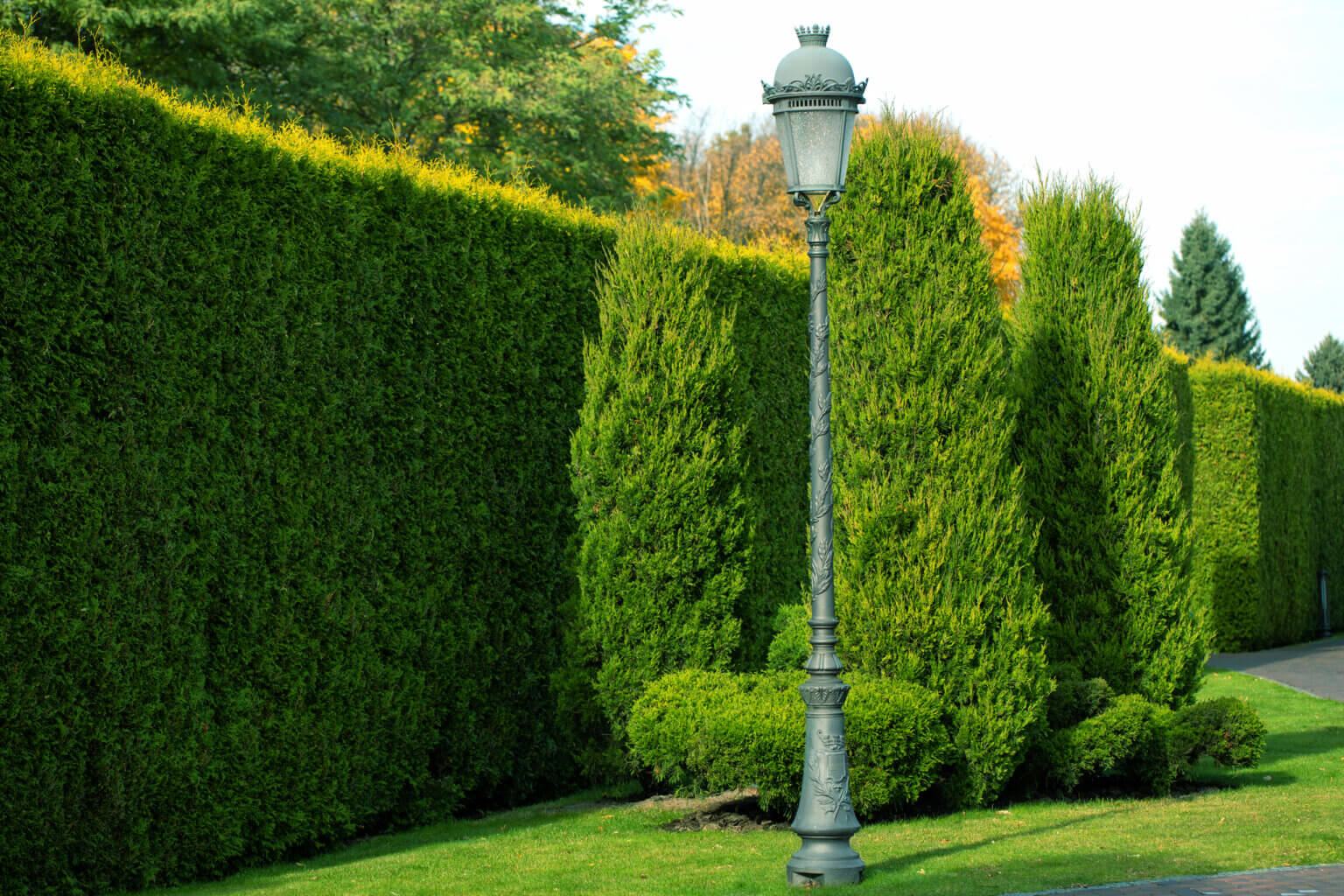
A well‑kept hedge frames a property, provides privacy, and adds year‑round greenery. But in the Okanagan’s climate, timing is everything. Trim right before an extreme cold snap and tips can desiccate; trim late in summer and new growth may not harden off before winter. This guide explains when and how often to trim common hedges, with practical advice tailored to local conditions, species, and homeowner needs.
How Okanagan Conditions Affect Timing
Our hot, dry summers put hedges under stress, so trimming during a heat wave can brown edges and slow recovery; aim for cooler mornings or overcast days instead. Early autumn can also bring sudden cold snaps, so avoid heavy cuts right before frost to prevent dieback on tender regrowth. Check your municipality or water provider for current watering restrictions and schedule your trim so you can water in afterwards.
Why Hedges Bulge and Thin Out
Two things cause “leggy” bottoms: shade and long intervals between trims. Aim for a slight taper so the top is a little narrower than the base. This lets light reach lower foliage and keeps the hedge green right to the ground. Regular, light passes maintain a dense face better than infrequent hard cuts.
When to Trim Hedges?
We book most hedge trimming from September to early December so our clients can enjoy a crisp form through winter. Another window is from February to early May to avoid summer heat. We often trim multiple species on the same visit for scheduling efficiency, then fine‑tune how hard and where we cut by species within those windows.
Species‑specific Notes
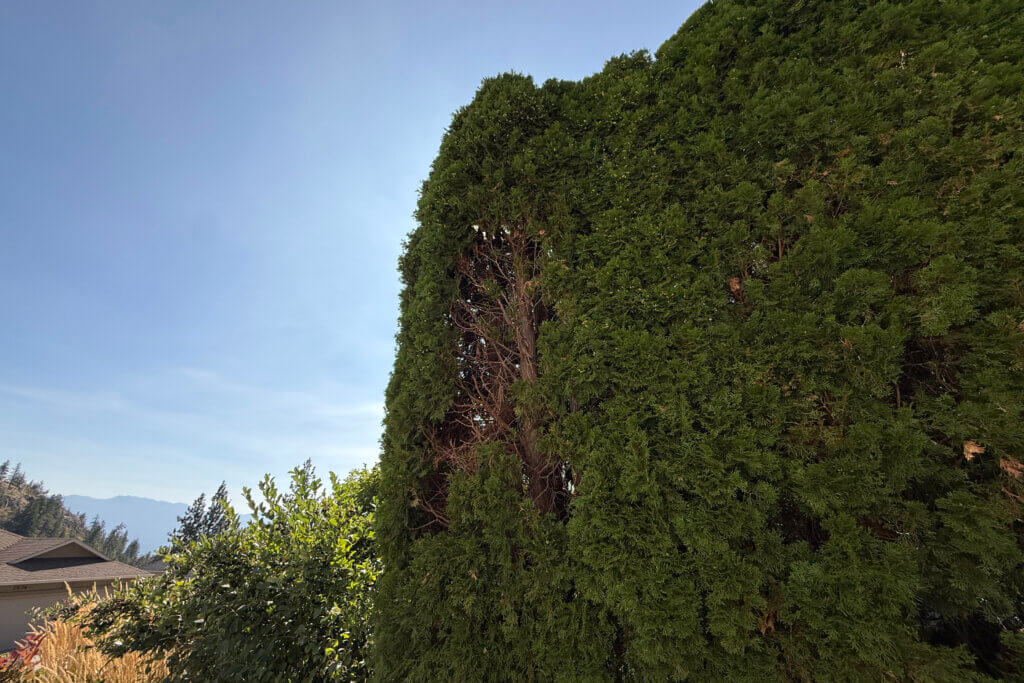
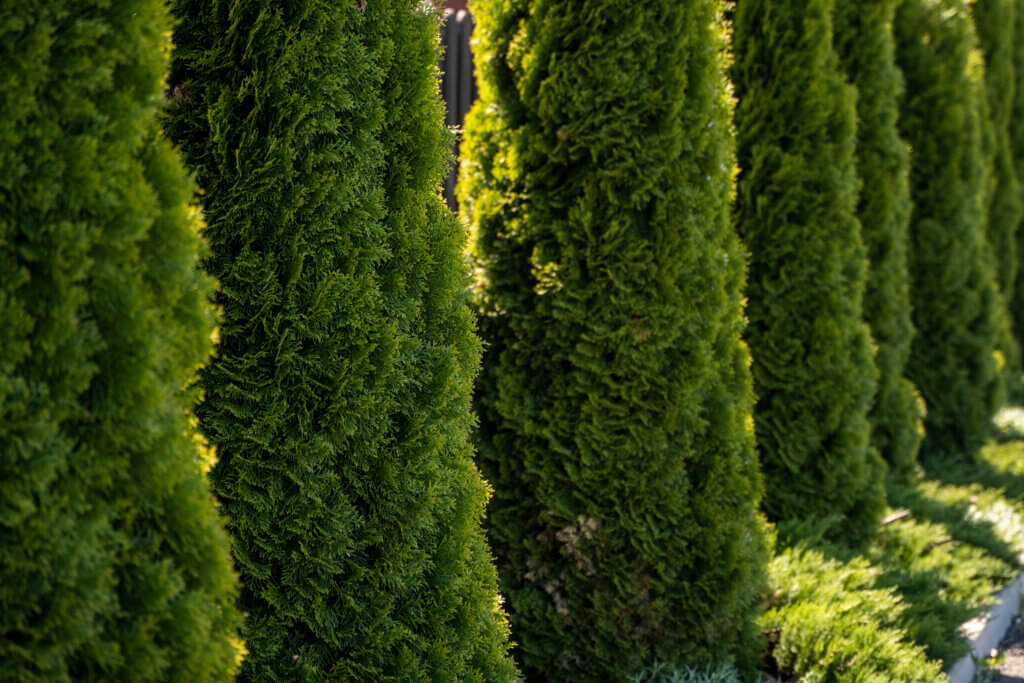
- Cedar (Thuja): Stay in the green; avoid cutting into old brown wood. Keep a slight top‑narrow taper, and stage any height reductions over multiple seasons. You can train nearby green laterals across small gaps.
- Yew (Taxus): Can back‑bud on older wood, so renovation is feasible. Keep heavier reduction work to cooler periods; a light mid‑summer tidy is fine once the flush hardens and if it’s not hot.
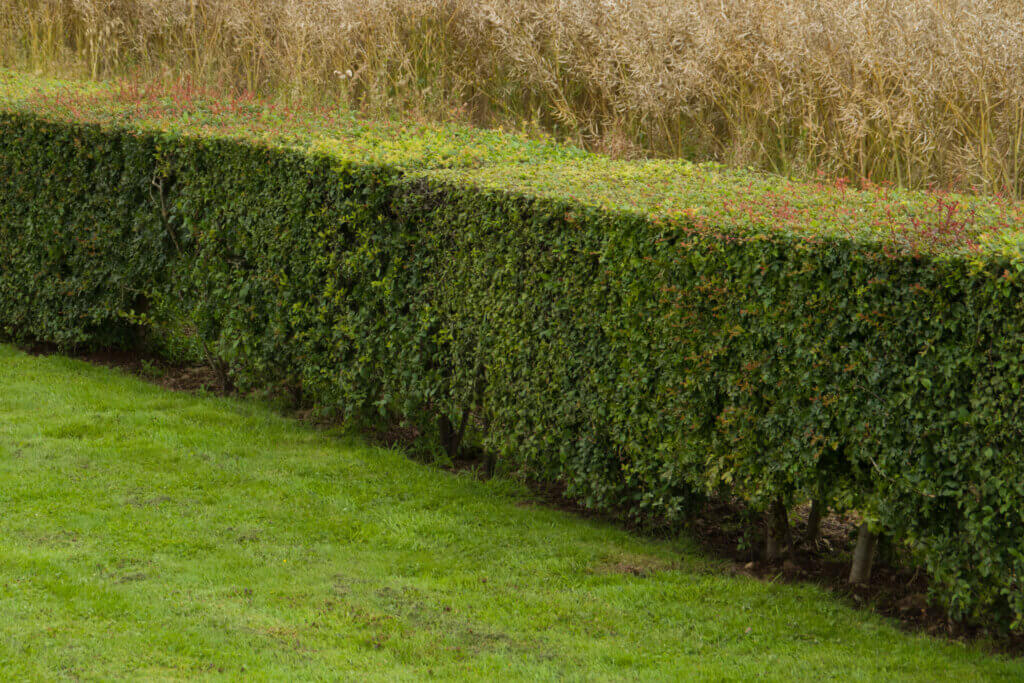
- Privet (Ligustrum): Prefers little‑and‑often light passes for a tight formal face; stop late in the season to avoid frost nipping tender regrowth. Maintain a slight taper.
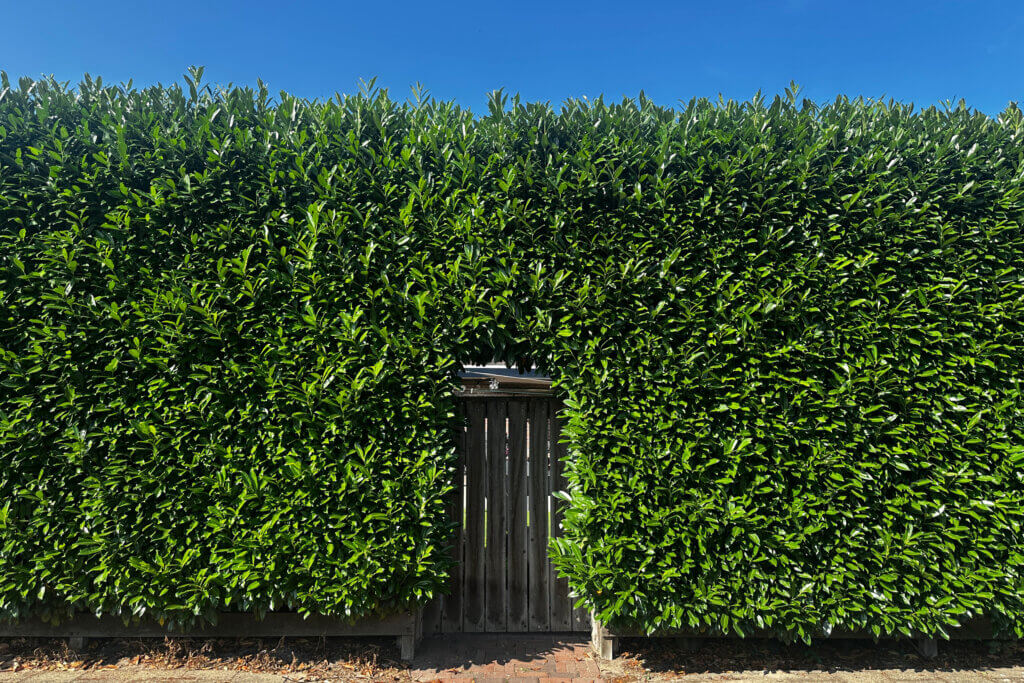
- Laurel (Prunus): Less common locally, more common on the coast or in sheltered microclimates. Where present, favour post‑bloom shaping and use secateurs on large leaves to prevent ragged edges; light fall tidies only in mild spells.
How Often to Trim Hedges?
- New hedges, years 1 to 2: Light formative trimming to establish the desired outline and good branching.
- Established formal hedges: One to two light trims per season.
- Screening hedges: One seasonal trim plus selective thinning so light reaches the interior.
Weather and Calendar Cues
- Storm response: Remove broken or hanging pieces promptly with clean cuts.
- After spring flush: Wait until new growth has firmed up before the season’s first shaping.
- Skip heat waves: Delay non‑urgent trimming during extreme heat or drought stress.
- Cold snaps & snow: Avoid heavy cuts immediately before an extreme cold snap or heavy, wet snow event.
Nesting Birds and Legal Caution
Before trimming from spring to late summer, check hedges and the ground at their base for active nests. If you find one, defer work until after fledging.
- Federal: The Migratory Birds Regulations, 2022 (MBR 2022), under the Migratory Birds Convention Act (MBCA), protect active nests of migratory birds; some species have year‑round nest protection.
- British Columbia: The Wildlife Act prohibits destroying or disturbing the occupied nest of any bird and gives year‑round protection to certain raptors and herons.
- Local note: California quail commonly found in the Okanagan are not covered by the federal MBCA, but their occupied nests are protected under the BC Wildlife Act, so leave them undisturbed until they are no longer active.
For planning, consult Environment and Climate Change Canada’s nesting‑period calendars. This section is information‑only and not legal advice.
Techniques for Trimming
- Set straight lines: Use a taut string line or guide board for consistent tops and faces. Keep the top slightly narrower than the base to favour lower foliage.
- Choose the right tool: Hand shears or hedge trimmers for small‑leaf species, secateurs for larger‑leaf laurel to avoid ragged leaf cuts.
- Clean and sharp: Sharp blades make cleaner cuts and reduce browning. Sanitize tools between properties or after working on diseased material.
- Work safely: Use the right ladder on firm footing, have a spotter for tall hedges, and keep clear of conductors and utilities. Call a professional where access is limited or heights are significant.
Hedge Trimming After‑care
- Water in within local rules: A deep watering after trimming helps recovery. Check your local watering restrictions before you schedule, then water during permitted times.
- Mulch: Add 2 to 3 inches of mulch to conserve moisture and moderate soil temperature.
- Fertilizer: In spring, favour slow‑release or compost. Avoid high‑nitrogen fertilizer late in summer.
- Clean up: Remove or compost clippings so they do not smother the hedge base.
Cleanup and Disposal Options
- Small clippings can be binned or composted at home if suitable.
- For larger volumes, use municipal or regional yard‑waste programs or depots.
When to Call an Arborist
- Hedges that are very tall, require staged height reduction, sit near utilities, or involve unstable ground.
- If you are unsure about species response to heavier pruning. Cedar and other conifers can be unforgiving if you cut into old wood, while yew tolerates renovation better.
Summary
In the Okanagan, most formal hedges do best with a light shaping once or twice each growing season after the spring flush has firmed up. Reserve heavier reductions for cooler periods when plants are not heat‑stressed. Always check carefully for active bird nests and defer work if you find one. Federal and provincial laws protect active nests.